Vilnius University | Faculty of Medicine
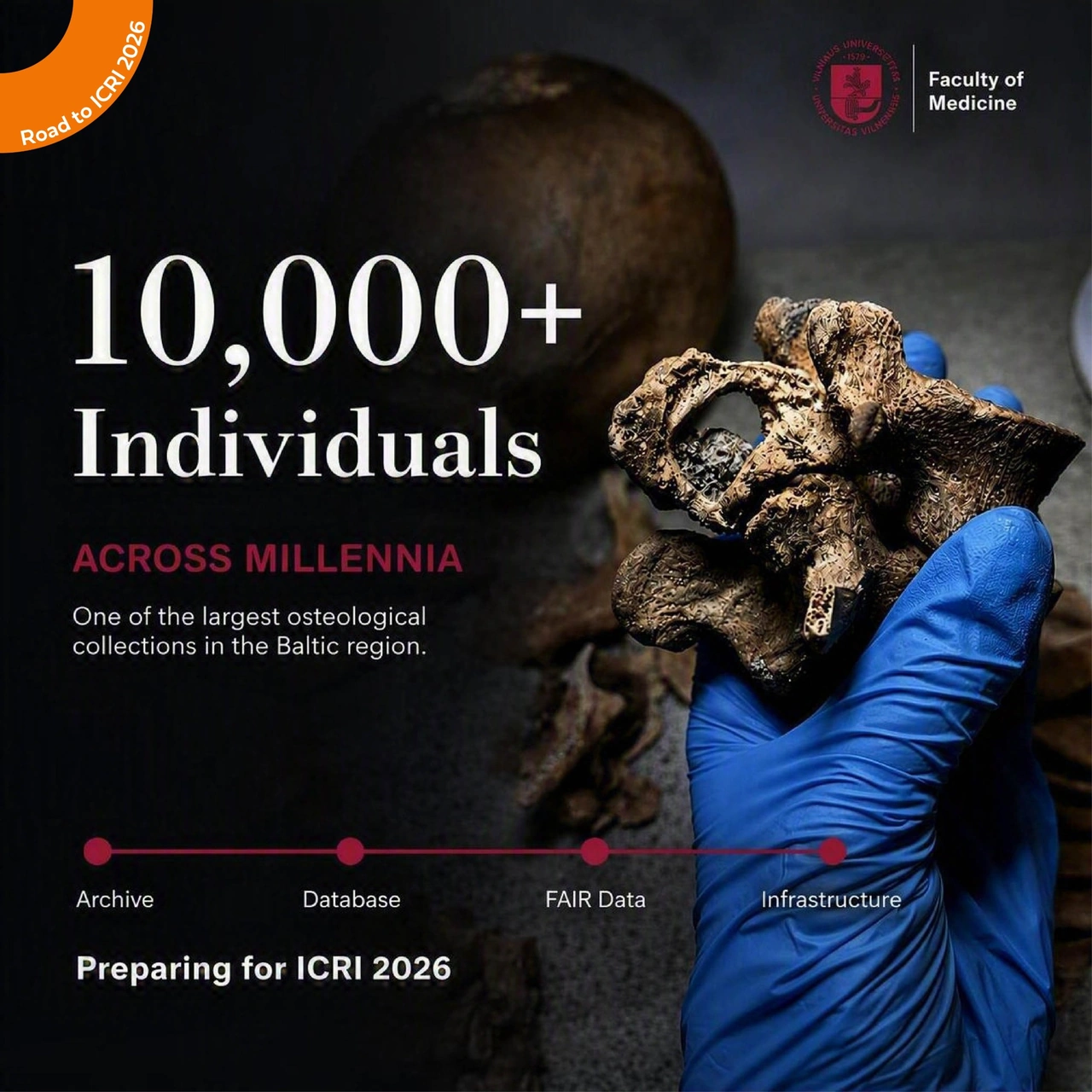
The Specialised Repository of Bioarchaeological Materials at the Vilnius University Faculty of Medicine (Vilnius, Lithuania) comprises more than 10,000 individuals from the Mesolithic to the Late Modern period. It represents one of the most substantial osteological research resources in the Baltic region (Kozakaitė et al., 2020).
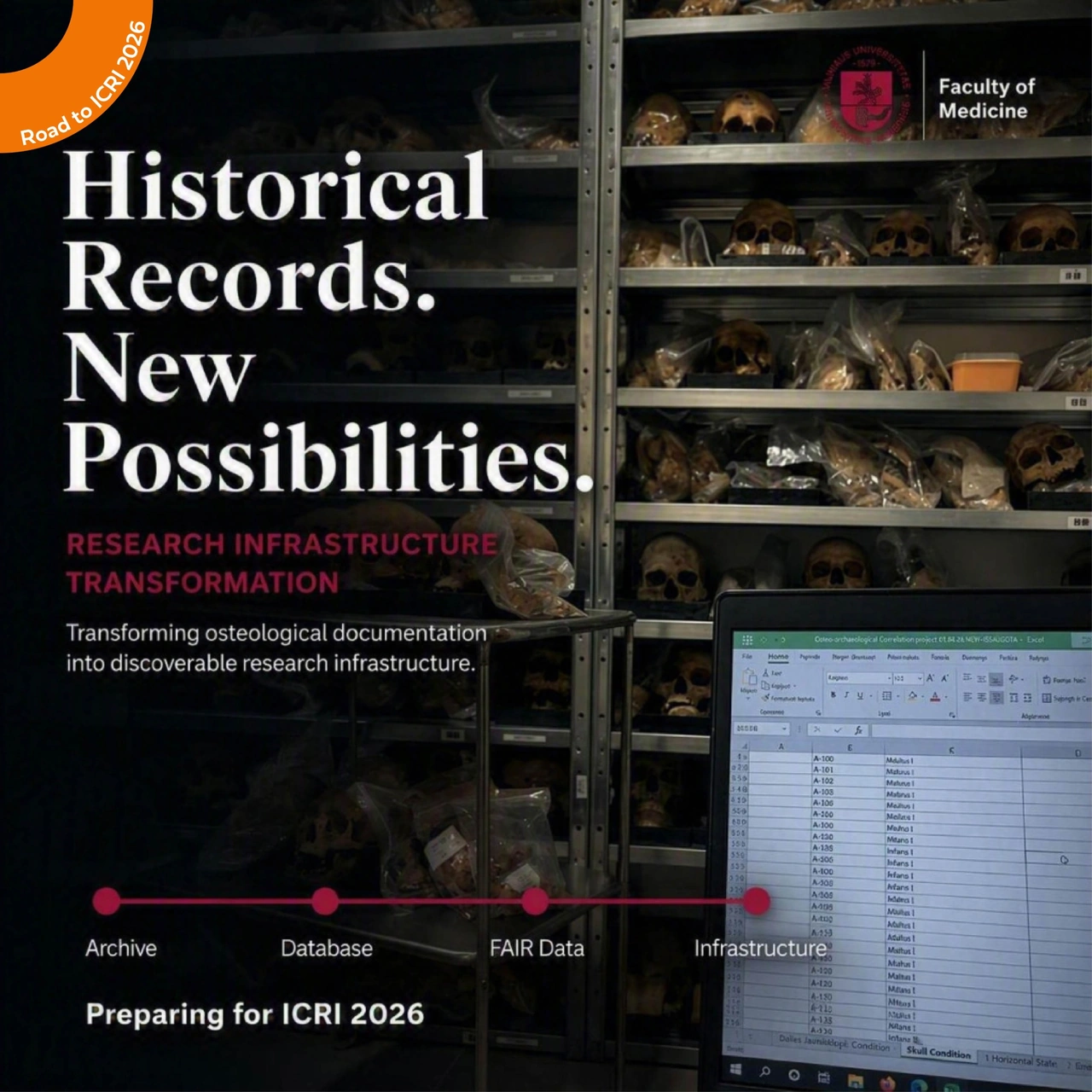
As uniquely rich biological archives that preserve evidence of health, disease, and environmental exposure over millennia, historical osteological collections have increasing potential to support longitudinal population health research (Alves-Cardoso & Riso, 2022; Santos, 2020). However, despite extensive scholarly documentation, the absence of standardised data structures, harmonised metadata, and interoperable formats prevents integration with national and European health data ecosystems. This disconnect has been identified as a major barrier to ethically sustainable bioarchaeological research, limiting data reuse and interoperability while contributing to redundant sampling and repeated destructive analyses of finite human remains (Lien-Talks, 2024).
The creation of a multidisciplinary, research-focused database structure with a model of collections management based on easily findable, standardised data records, rather than an inventory-focused one, will facilitate multiple ongoing research projects, including ancient DNA (aDNA), isotope analysis, paleoproteomics, and pathology, enabling better access and cross-referencing with modern data. As more methods become available for testing historical samples, and while modern genetics and pathology are often siloed into non-communicating sectors, this novel approach will be the first known example to specifically bridge the gap between historical and current data integration. Once built, this model will test the limits of longitudinal disease mapping through space and time by utilising a disease with identifiable macro characteristics used by paleo pathologists, and that is easily tested for in modern populations (e.g., tuberculosis), and molecular disease markers, thereby enhancing understanding of their sociocultural and climatic frameworks.
Learn more on www.mf.vu.lt
European Social Survey (ESS)

Network Italiano Core Facilities (NICo)

Therapeutic Innovation Australia (TIA)

EGI Foundation

Emphasis

NEXUS

Einstein Telescope

AURIN
SoBigData
Helmholtz-Zentrum Dresden-Rossendorf (HZDR)

ELIXIR
INFN

Laboratories Canada
ECCSEL ERIC
Monitoring Electoral Democracy (MEDem)
EPOS ERIC